

Executive Summary: The Shift to Mechanized Industrial Hygiene
In the post-pandemic era, the industrial sector faces a dual challenge: an unprecedented industrial labor shortage and escalating industrial hygiene standards. Traditional manual mopping is no longer a viable solution for facilities exceeding 500 square meters. As global supply chains face increasing pressure for speed and reliability, the cleanliness of the logistics hub or manufacturing floor has evolved from a "maintenance task" to a "strategic asset." This whitepaper analyzes the transition from labor-intensive processes to high-efficiency mechanized cleaning, focusing on the Total Cost of Ownership (TCO) and the Return on Investment (ROI) provided by the CleanHorse professional line, specifically the K4 and ARES610 models.
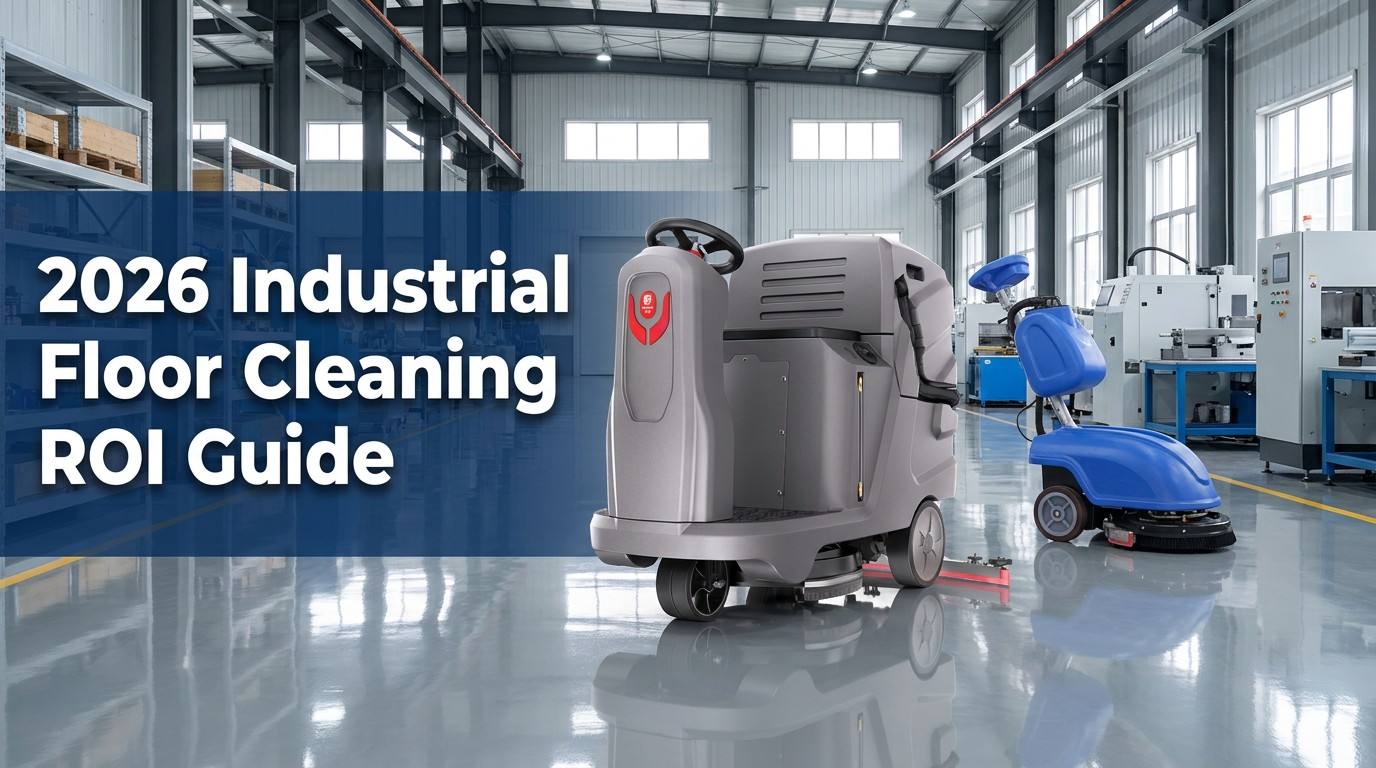
1. The Macro Environment: Labor Shortage and the Cost of Inaction
The global manufacturing and logistics sectors are experiencing a structural shift in the workforce. Manual cleaning roles are increasingly difficult to fill, leading to a "cleaning gap" that threatens operational safety and floor longevity. According to recent industry surveys, the turnover rate for manual cleaning staff in industrial settings exceeds 200% annually in some regions.
1.1 The Hidden Costs of Manual Cleaning
Manual cleaning is deceptive. While the "entry price" of a mop and bucket is low, the cumulative OpEx is astronomical. Manual cleaning often results in inconsistent results, high water consumption, and potential damage to sensitive flooring like epoxy floors. More importantly, the hourly cost of a manual worker, when adjusted for benefits, insurance, recruitment, and turnover, often exceeds the amortized cost of high-end machinery within the first six months of operation. Furthermore, manual cleaning leaves a residual film of dirty water that, upon drying, creates a slip-hazard and attracts more soilage-a phenomenon known as "secondary contamination."
1.2 Impact on Industrial Hygiene Standards
Modern facilities must adhere to strict hygiene protocols (such as HACCP for food-grade facilities or ISO standards for electronics) to prevent cross-contamination and ensure worker safety. A suction power focused mechanized system ensures that water and contaminants are removed instantly, leaving floors dry and safe, which manual methods simply cannot achieve. In the context of industrial hygiene standards, the ability to provide a "clean and dry" floor in a single pass is the benchmark for modern facility management.
2. Technical Excellence: Engineering the CleanHorse Masterpiece
CleanHorse machines are engineered with a focus on durability and vacuum motor efficiency. By utilizing a rotomolded fuselage, these machines offer superior impact resistance and chemical durability compared to standard injection-molded alternatives. Rotomolding allows for a stress-free polymer structure that can withstand the daily rigors of a high-traffic industrial environment without the risk of cracking or corrosion.
2.1 The K4: Precision Engineering for Compact Spaces
The K4 (Foldable Walk-behind Scrubber) is designed for agility without compromising on power. It is the ideal solution for retail environments, tight warehouse aisles, and facilities with complex layouts.
Cleaning Efficiency:
● 850 m²/h (Replacing approximately 5-6 manual workers)
Solution/Recovery Tank:
● 11L / 13L (Optimized for weight-to-performance ratio)
Cleaning Width:
● 350mm (Fits through standard door frames and narrow aisles)
Operational Weight:
● 36kg (Light enough for multi-floor transport)
Acoustic Profile:
● 65dB (Ultra-quiet for daytime operation in customer-facing areas)
Power Source:
● Equipped with high-performance
maintenance-free batteries
, ensuring minimal downtime and zero electrolyte monitoring.

2.2 The ARES610: The High-Volume Powerhouse
For large-scale warehouses and manufacturing plants, the ARES610 (Compact Ride-on Scrubber) represents the pinnacle of efficiency. It is designed to maximize "uptime" by reducing the frequency of dump-and-fill cycles.
Cleaning Efficiency:
● 4600 m²/h
Dual Tank Capacity:
● 85L / 85L (Symmetric design for balance and stability during high-speed turns)
Cleaning Width:
● 580mm
Squeegee Width:
● 800mm (Parabolic design for 100% water recovery)
Endurance:
● 3-4 hours of continuous runtime (Covering up to 15,000 m² on a single charge)
Climbing Capacity:
● 16° (Ideal for multi-level facilities and steep loading ramps)


3. Floor Protection and Material Science
The interaction between the scrubber brush and the floor surface is critical. Industrial floors, particularly epoxy floor coatings, polished concrete, and terrazzo, require precise pressure and chemical distribution.
3.1 Preserving Surface Integrity on Epoxy and Polished Floors
Excessive moisture or harsh manual scrubbing can degrade floor sealants and cause delamination. CleanHorse technology utilizes controlled water flow and optimized brush pressure to remove dirt while preserving the aesthetic and structural integrity of high-value floor coatings. For epoxy floors, the use of non-marking tires and adjustable downward pressure prevents the "burnishing" effect that can occur with inferior machines.
3.2 Terrazzo and Concrete Maintenance
In older facilities with porous concrete, the suction power of the ARES610 is essential for pulling embedded dirt out of the surface pores. Without this high-efficiency vacuum system, dirt remains trapped, eventually grinding down the floor surface like sandpaper under the weight of forklifts and foot traffic.
4. Operational Safety and Liability Management
Safety is not just a moral obligation; it is a financial one. Slip-and-fall accidents are the leading cause of workers' compensation claims in the industrial sector.
4.1 Reducing Slip-and-Fall Risks
Manual mopping keeps floors wet for 10-20 minutes. A CleanHorse scrubber, with its high vacuum motor efficiency, leaves the floor dry to the touch in less than 3 seconds. By eliminating the "wet floor" window, facilities can significantly reduce their liability insurance premiums and avoid the catastrophic costs of workplace injuries.
4.2 Ergonomics and Worker Retention
Mechanized cleaning is less physically demanding than manual mopping. By providing workers with ride-on tools like the ARES610, facility managers improve job satisfaction and reduce physical strain, which directly impacts worker retention in a tight labor market.
5. The Economic Logic: ROI and TCO Analysis
Investing in a floor scrubber is a financial decision based on the Total Cost of Ownership (TCO).
5.1 ROI Calculation Model
The Return on Investment can be calculated using the following formula:
Case Study: ARES610 in a 5,000 m² Facility
Manual Cleaning:
● 3 workers, 4 hours each = 12 man-hours/day. At $15/hour, that is $180/day or $54,000/year (300 days).
ARES610 Cleaning:
● 1 worker, 1.2 hours = 1.2 man-hours/day. At $15/hour, that is $18/day or $5,400/year.
Labor Savings:
● $48,600 per year.
Initial Investment & TCO:
● Approx. $12,000.
Payback Period:
● Less than 4 months.
5.2 TCO Factors and Long-term Sustainability
Initial Capital Expenditure (CapEx):
● The purchase price of the unit.
Operating Expenses (OpEx):
● Electricity for charging, water, and detergent. Mechanized cleaning uses 70% less water and chemicals than manual methods.
Maintenance:
● Replacement of squeegee blades and brushes. CleanHorse's use of
maintenance-free batteries
eliminates the cost of battery maintenance labor and potential damage from improper watering.
6. Selection Decision Matrix: Choosing Your Fleet
Facility managers should select equipment based on floor area, congestion level, and specific soilage types.
Feature
| K4 (Foldable)
| ARES610 (Ride-on)
|
| Recommended Area | 500 - 1,500 m²
| 2,000 - 10,000 m²
|
| Primary Advantage | Portability & Storage
| Maximum Productivity
|
| Best For | Retail, Offices, Small Shops, Gyms
| Warehouses, Factories, Malls, Airports
|
| Battery Type | Maintenance-free
| Maintenance-free
|
| Maneuverability | Exceptional (Fits in closets)
| High (Compact rider design)
|
| Surface Versatility | High (Multi-brush compatible)
| Heavy Duty (Industrial grade)
|
7. Conclusion: Future-Proofing Your Facility
As industrial standards continue to tighten, the integration of smart sensors, telematics, and even higher vacuum motor efficiency will become standard. CleanHorse remains at the forefront of this evolution, ensuring that every rotomolded fuselage produced meets the rigorous demands of the modern industrial environment. Transitioning to CleanHorse is not just about cleaning; it is about protecting your floor assets, managing your workforce effectively, and ensuring your facility meets the global industrial hygiene standards of tomorrow.
FAQ: Optimizing Your Industrial Floor Scrubber Purchase
Q1: What is the best floor scrubber for warehouse environments?
A: For most medium to large warehouses, a compact ride-on scrubber like the ARES610 is the best choice. It balances high cleaning efficiency (4600 m²/h) with a compact footprint, allowing it to navigate through pallet racking while providing enough suction power to leave floors bone-dry in one pass. This prevents forklift tire marks and enhances overall site safety.
Q2: How do maintenance-free batteries impact TCO?
A: Maintenance-free batteries (Gel or AGM) eliminate the need for regular watering and prevent acid spills, which are common with traditional lead-acid batteries. This reduces labor time for maintenance and prevents "forgotten maintenance" which leads to premature battery failure. This directly lowers the Total Cost of Ownership (TCO) and ensures consistent machine availability.
Q3: Can CleanHorse scrubbers be used on epoxy floors?
A: Yes. CleanHorse machines are specifically designed for sensitive industrial surfaces. By adjusting brush types (using soft nylon or specialized pads) and solution flow, they effectively clean epoxy floors without scratching or dulling the finish. The constant water recovery prevents chemical pooling that can weaken epoxy bonds over time.
Q4: What are the key benefits of a rotomolded fuselage?
A: A rotomolded fuselage is a single-piece construction that is virtually indestructible. Unlike metal frames that rust or injection-molded plastic that can be brittle, rotomolded polyethylene is resilient and chemical-resistant. This ensures the machine survives the harsh "bumps and bruises" of a busy manufacturing environment, protecting your long-term investment.
Q5: How much suction power is needed for industrial cleaning?
A: Industrial cleaning requires high suction power and vacuum motor efficiency to recover all dirty water, especially on uneven floors. The ARES610's 800mm parabolic squeegee and high-airflow vacuum system are optimized to ensure no "puddling" occurs, which is vital for maintaining industrial hygiene standards and preventing accidents.


