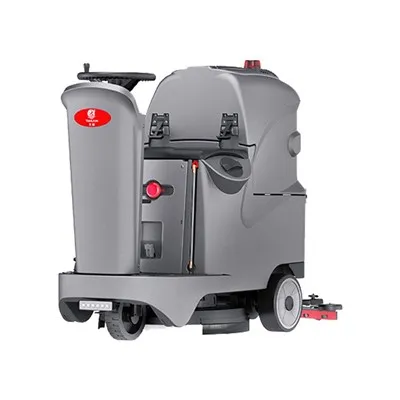
How much water does a manual floor scrubber typically use?
As a supplier of Manual Floor Scrubbers, I often get asked about the water consumption of these machines. Understanding the water usage of a manual floor scrubber is crucial for both cost - effectiveness and environmental considerations. In this blog, I'll delve into the factors that influence water consumption and provide an estimate of how much water a manual floor scrubber typically uses.
Factors Affecting Water Consumption
1. Floor Type
The type of floor surface plays a significant role in determining water usage. For instance, a smooth tile floor may require less water compared to a rough concrete floor. Tile floors are easier to clean, and the dirt and grime can be removed with a relatively small amount of water. On the other hand, concrete floors have more pores and irregularities, which can trap dirt. To effectively clean them, more water is needed to penetrate and loosen the dirt.
2. Dirt Level
The amount of dirt on the floor is another important factor. A lightly soiled floor will need less water for cleaning than a heavily soiled one. If the floor has just a thin layer of dust, a small amount of water can be sufficient to wipe it away. However, if there are stubborn stains, grease, or large amounts of debris, more water will be required to dissolve and remove these contaminants.
3. Scrubbing Method
The way the manual floor scrubber is used also affects water consumption. Aggressive scrubbing may require more water to keep the floor wet and facilitate the cleaning process. If the operator is using a gentle scrubbing motion, less water may be needed. Additionally, the frequency of rinsing the scrubber pad can impact water usage. Frequent rinsing will naturally consume more water.
4. Machine Design
The design of the manual floor scrubber itself can influence water consumption. Some models are equipped with advanced water - control systems that allow for precise regulation of water flow. These systems can help reduce water waste by ensuring that only the necessary amount of water is dispensed. Other machines may have larger or smaller water tanks, which will also affect how much water can be used during a cleaning session.
Typical Water Consumption
On average, a manual floor scrubber typically uses between 0.5 to 2 gallons (1.9 to 7.6 liters) of water per 100 square feet (9.3 square meters) of floor area. This is a rough estimate, and the actual water usage can vary depending on the factors mentioned above.
For a lightly soiled tile floor, the water consumption may be closer to the lower end of the range, around 0.5 gallons per 100 square feet. This is because the smooth surface allows for easy cleaning with less water. In contrast, a heavily soiled concrete floor may require up to 2 gallons per 100 square feet.
Let's take a look at a practical example. Suppose you have a small office space of 1000 square feet. If you are using a manual floor scrubber to clean a lightly soiled tile floor, you might use around 5 gallons (18.9 liters) of water. However, if it's a heavily soiled concrete floor, you could end up using up to 20 gallons (75.7 liters) of water.
Comparison with Other Floor Scrubbing Machines
It's interesting to compare the water consumption of manual floor scrubbers with other types of floor scrubbers, such as Electric Ride On Floor Scrubber and Ride On Floor Scrubber with Water Gun.


Electric ride - on floor scrubbers are generally more efficient in terms of water usage. They are designed to cover larger areas quickly and often have more advanced water - management systems. These machines can typically use around 0.3 to 1.5 gallons per 100 square feet, depending on the model and the floor conditions.
Ride - on floor scrubbers with water guns are more powerful and are often used for heavy - duty cleaning. They may use more water than manual floor scrubbers, especially if they are used to clean large, heavily soiled areas. However, they can also clean much faster, which may offset the higher water consumption in some cases.
Tips to Reduce Water Consumption
If you are using a Manual Floor Scrubber and want to reduce water usage, here are some tips:
- Pre - sweep the floor: Remove loose dirt and debris before using the scrubber. This will reduce the amount of dirt that needs to be removed with water, thus lowering water consumption.
- Use the right amount of cleaning solution: A proper dilution of the cleaning solution can help break down dirt more effectively, reducing the need for excessive water.
- Adjust the water flow: If your manual floor scrubber has a water - control feature, adjust the flow to the minimum amount needed for effective cleaning.
- Reuse water when possible: If the water is not too dirty, you can reuse it for initial rinsing or for cleaning less soiled areas.
Conclusion
In conclusion, the water consumption of a manual floor scrubber depends on several factors, including floor type, dirt level, scrubbing method, and machine design. On average, it uses between 0.5 to 2 gallons of water per 100 square feet of floor area. By understanding these factors and implementing water - saving tips, you can optimize the water usage of your manual floor scrubber.
If you are in the market for a manual floor scrubber or have any questions about water consumption and cleaning efficiency, we'd be more than happy to assist you. Our team of experts can provide you with detailed information and help you choose the right machine for your needs. Contact us to start a discussion about your floor - cleaning requirements and explore the possibilities of our high - quality manual floor scrubbers.
References
- Cleaning Industry Research Institute (CIRI). "Best Practices for Floor Cleaning".
- International Sanitary Supply Association (ISSA). "Floor Cleaning Guidelines".