


Introduction: The 30 Percent Factor in Industrial Cleaning
In the high-stakes world of industrial facility management, the floor scrubber is a critical asset. However, many operators overlook the fact that the battery system represents approximately 30 percent of the machine's total purchase price. For a high-performance fleet like the CleanHorse ARES610 or the M3 Ride-on Sweeper, the battery is the economic heart of the operation. With the industry-wide pivot toward Lithium Iron Phosphate (Li-FePO4) technology, the rules of maintenance have fundamentally changed. This guide explores the intersection of electrochemistry, digital diagnostics, and Total Cost of Ownership (TCO) to help you maximize every charging cycle.
1. The Economics of Energy: Why TCO Starts at the Cell
In order to increase the reliability of the data, we have conducted extensive testing in many factories in China, such as BYD, Torch, and FAW.Total Cost of Ownership (TCO) in cleaning equipment is driven by uptime and component longevity. If a battery fails prematurely due to poor maintenance, the ROI of the entire machine plummets. By transitioning to Li-FePO4, CleanHorse machines benefit from a higher energy density and a longer cycle life compared to traditional lead-acid batteries. However, this superior performance is contingent on understanding the Depth of Discharge (DoD).
The Physics of Depth of Discharge (DoD)
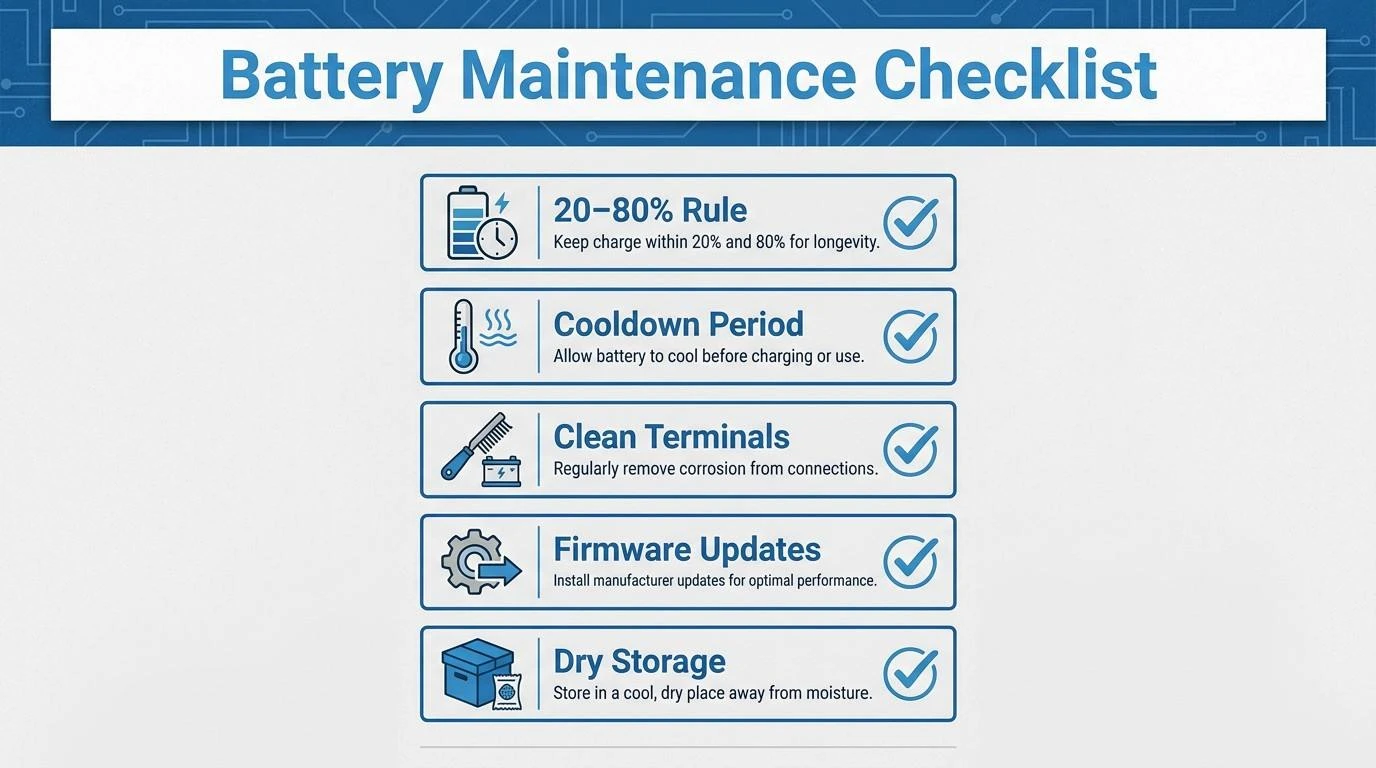
Every battery has a finite number of cycles. Industrial batteries typically suffer from physical stress during deep discharge. Maintaining a DoD of 80 percent (never letting the charge drop below 20 percent) can effectively double the battery's lifespan from 2,000 cycles to over 4,000 cycles.
2. The Science of Li-FePO4: Chemical Stability and Thermal Runaway Prevention
Lithium Iron Phosphate is inherently more stable than ternary lithium batteries. One of the primary risks in high-output industrial machines is thermal runaway-a feedback loop where rising temperatures cause further heating. Li-FePO4 has a higher thermal runaway threshold. However, maintenance is still required to ensure that dust or debris does not insulate the battery compartment, which could impede heat dissipation during the charging cycle.
3. BMS Telematics: The Digital Brain of Your CleanHorse Machine
Modern CleanHorse equipment is equipped with an advanced Battery Management System (BMS). This is a sophisticated computer that manages cell balancing. For large fleets, BMS Telematics allows facility managers to monitor battery health in real-time. The BMS ensures that every cell is charged to the same voltage and monitors for over-voltage or over-current scenarios, preventing the self-discharge rate from spiking during inactivity.

4. Temperature Dynamics: Electrolyte Activity and Performance
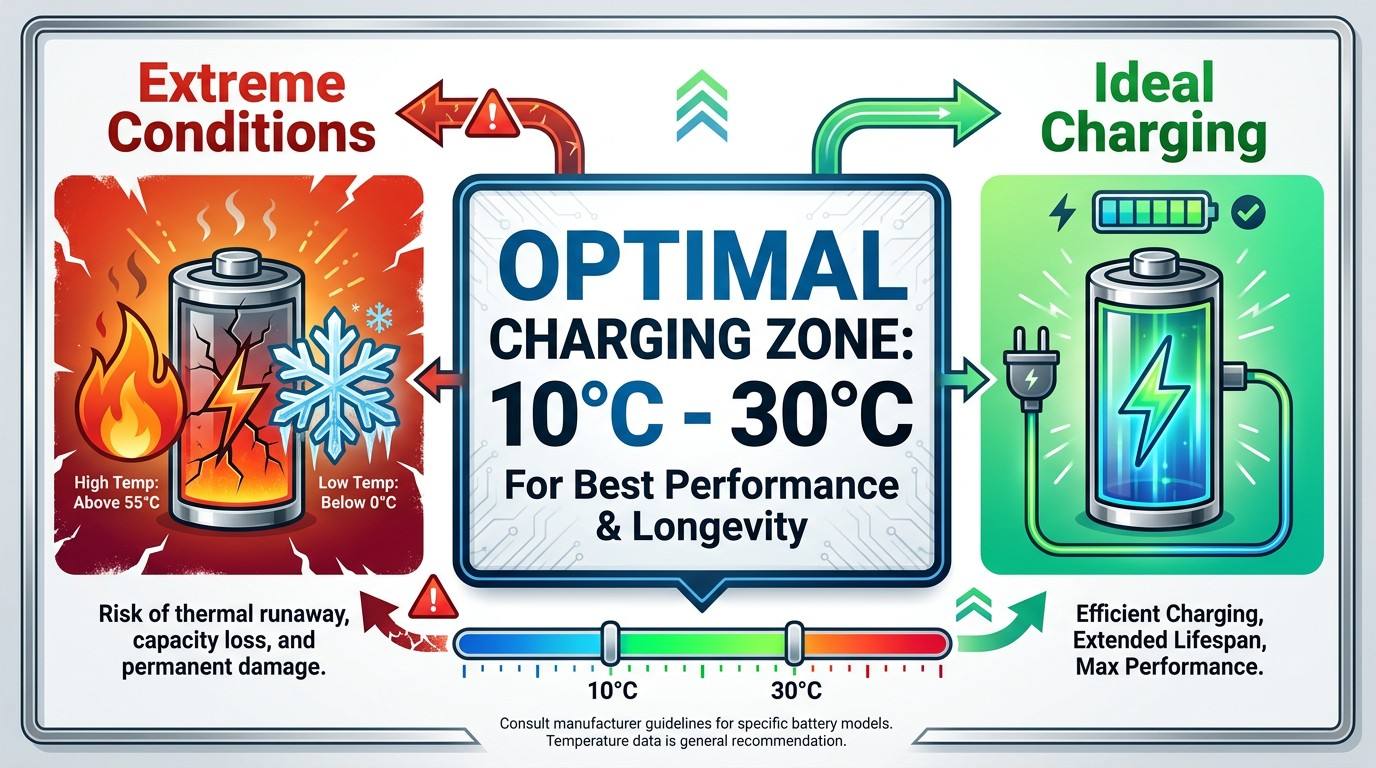
The performance of your floor scrubber is tied to the ambient temperature. When temperatures drop, the battery electrolyte becomes more viscous, slowing down the movement of ions. At 0 degrees Celsius, a battery might only deliver 70 to 80 percent of its rated capacity. Conversely, charging in temperatures above 45 degrees Celsius accelerates chemical aging. CleanHorse recommends charging in a climate-controlled environment to preserve the chemical lattice of the cells.
5. Seasonal Strategy: Mastering Winter Storage
Winter is a dangerous season for industrial batteries. All batteries have a self-discharge rate, typically losing 2 to 3 percent of their charge per month. In winter, if the voltage drops below a critical cut-off point, the BMS may enter a permanent sleep mode to prevent fire risks, effectively bricking the battery. Before storage, charge the battery to 50 or 60 percent and physically disconnect it if necessary.
6. Model-Specific Maintenance Protocols
The Ride-on Powerhouse: ARES610 and M3
These machines are designed for 4 to 6 hours of continuous operation. Ensure the high-current charging plugs are free of oxidation. High resistance at the plug can cause localized heating. Use the ECO mode when cleaning light dust to reduce the discharge current and minimize internal heat generation.
The Walk-behind Series: K1 to K4
The K-series often faces more frequent opportunity charging. While Li-FePO4 supports this, it is vital to complete a full 100 percent charge at least once a week to allow the BMS to perform a full cell balancing cycle.
7. Conclusion: The Roadmap to 5-Year Battery Life
Mastering battery maintenance is the difference between a high-performing cleaning operation and a capital-draining one. By respecting the Depth of Discharge, leveraging BMS Telematics, and managing environmental variables, you ensure your CleanHorse fleet remains the most efficient part of your facility.
FAQ: Google Featured Snippets Reference
Q1: How to store a floor scrubber battery in winter?
A: To store your floor scrubber in winter, charge the battery to 50 or 60 percent, disconnect it from the machine, and keep it in a dry area between 10 and 25 degrees Celsius. Check the charge monthly to ensure the self-discharge rate has not dropped the voltage below the critical threshold.
Q2: What is the ideal Depth of Discharge (DoD) for lithium floor scrubbers?
A: For maximum longevity, the ideal Depth of Discharge is 80 percent. You should recharge your machine when it reaches 20 percent remaining capacity. Repeatedly discharging to 0 percent significantly shortens the total number of available charging cycles.
Q3: Why is my floor scrubber battery dying faster in the cold?
A: Cold temperatures increase the viscosity of the battery electrolyte, which slows down ion movement. Always store and charge your equipment in a tempered environment to maintain optimal electrolyte activity.
Q4: What does a BMS do in an industrial cleaning machine?
A: The Battery Management System acts as the digital guardian. It prevents overcharging, monitors temperature for thermal runaway prevention, balances individual cell voltages, and provides telematics data for remote fleet monitoring.
Q5: Can I opportunity charge my lithium battery?
A: Yes, Lithium-ion batteries in the CleanHorse series support opportunity charging. However, you must perform a full 100 percent charge at least once a week to allow the BMS to balance the cells and optimize the charging cycle.


